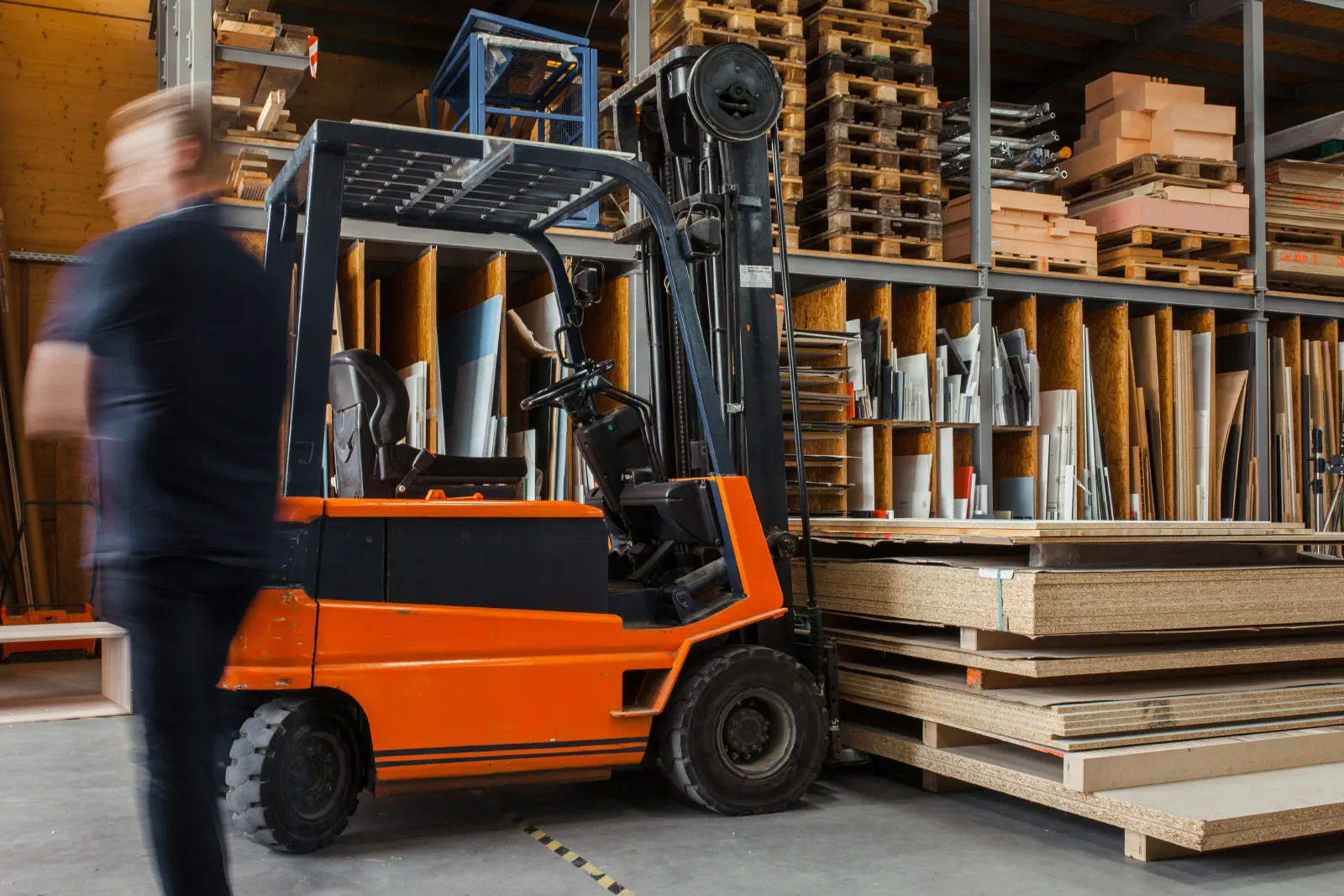
3PL Warehousing Services: What Shippers Should Know
Owning or leasing a warehouse has always been expensive. In 2026, it is even more so. Real estate costs, labor, equipment, insurance, and technology all continue to rise, and the operational complexity of running a distribution facility grows alongside them. That is why more shippers are turning to 3PL warehousing services as a way to access professional storage and distribution without the overhead of doing it themselves.
What Are 3PL Warehousing Services?
Third-party logistics warehousing refers to outsourcing your storage, inventory management, and fulfillment operations to an external logistics provider. Instead of managing your own warehouse, a 3PL partner handles the entire backend from receiving and storing products to picking, packing, and shipping orders to customers.
The key distinction from simply renting storage space is that 3PL warehousing is an active service, not a passive one. Your inventory is managed, tracked, and moved by people and systems that specialize in logistics. A good 3PL warehousing partner integrates with your operations, gives you real-time visibility into your inventory, and coordinates outbound shipping across whatever freight modes your freight requires.
What 3PL Warehousing Typically Includes
The scope of 3PL warehousing services varies by provider, but most programs cover the following core functions.
Receiving and put-away
When your freight arrives at the facility, the 3PL receives it, verifies the quantities, scans and records every item in the warehouse management system, and puts it away in an organized location. Discrepancies between what was shipped and what arrived are caught at this stage before they become fulfillment problems.
Inventory management
Through advanced warehouse management systems, you can monitor inventory levels, order status, and shipping updates in real time. You do not need to walk the floor or call anyone to know what you have on hand. That visibility connects directly into your planning so you can reorder at the right time without carrying excess stock.
Pick, pack, and ship
When an order comes in, the 3PL picks the items from storage, packs them according to your specifications, and ships them out through the appropriate carrier. For shippers moving LTL freight , full truckload , or parcel , the 3PL coordinates all outbound modes from a single operation.
Cross-docking and staging
For shippers who do not need long-term storage but need a facility to consolidate, sort, or stage freight before it moves to its next destination, cross-docking is a cost-effective option that reduces handling and speeds transit.
Returns processing
Returns are one of the most operationally complex parts of any fulfillment program. A 3PL with returns processing capability receives, inspects, and either restocks or disposes of returned goods according to your policy, without your team having to manage the flow.
The Cost Case for Outsourcing Warehousing
The financial argument for 3PL warehousing services is clear when the full cost of the in-house alternative is accounted for.
The upfront costs of running your own warehouse include space, labor, equipment such as forklifts, packing materials, insurance, and ongoing maintenance. Outsourcing tends to offer significant cost savings because 3PLs represent multiple brands, giving them bargaining power to negotiate bulk discounts with shipping companies that individual shippers cannot access.
Businesses in 2026 are outsourcing logistics more than ever. A small direct-to-consumer brand can save 20 to 40% by outsourcing fulfillment instead of renting a warehouse and staffing it independently.
Beyond the direct cost savings, outsourcing removes the fixed cost structure that makes in-house warehousing risky during slow periods. When your volume drops, your warehousing cost drops with it. When volume surges, the 3PL scales to match. 3PLs allow you to invest more capital during peak season and pull back during shoulder season. Since there is less overhead, it is very easy to adjust spending up or down to accommodate your business’s varying needs.
Who 3PL Warehousing Is Right For
Not every shipper needs a 3PL warehouse, but the profile of shippers who benefit is broader than most assume.
The clearest candidates are growing companies whose shipment volume has outpaced the capacity or capabilities of their current storage setup, businesses with seasonal demand that makes fixed warehouse commitments financially inefficient, and shippers who are expanding into new regions and need distribution presence without committing to long-term leases in unfamiliar markets.
If you need to hire rapidly to increase in-house capacity or invest in automation yourself, it is often more cost-effective to outsource fulfillment to a 3PL. This is especially true if you want to offer faster shipping options but find it challenging to do so with your current in-house operations.
Manufacturers who rely on just-in-time delivery of components, distributors managing complex multi-location inventory, and importers who need a domestic staging point after drayage from port are all strong candidates for 3PL warehousing services.
What to Look for in a 3PL Warehousing Provider
The right provider depends heavily on your freight profile, your product type, and how much integration you need between warehousing and your broader logistics program.
Technology and visibility
A modern 3PL warehouse runs on a warehouse management system that gives you real-time inventory data accessible from anywhere. If a provider cannot offer this, visibility into your own inventory will always be a manual process.
Location relative to your customer base
Most 3PLs have a wide network of fulfillment centers that allow you to store inventory in different locations, enabling you to ship orders closer to where your customers are and reduce transit time and cost. Understand where the provider’s facilities are relative to your highest-volume delivery zones before committing.
Freight coordination capability
A 3PL that handles only warehousing but not transportation means you are still managing two separate relationships for every outbound shipment. A provider who handles both warehousing and managed transportation gives you a single point of accountability across your entire freight operation.
Scalability during peak periods
Ask how the provider handles capacity during your peak season. Space, labor, and equipment all need to scale together. A 3PL that runs near capacity in normal conditions will struggle to serve you when you need them most.
Final Takeaway
3PL warehousing services give shippers access to professional storage, inventory management, and fulfillment operations without the capital investment and operational overhead of doing it in-house. In a market where costs are rising and flexibility matters more than ever, outsourcing warehousing to the right partner is one of the most effective ways to reduce overhead, improve service levels, and scale without building.
At HighQ Logistics, our warehousing services are designed to integrate with your broader freight program, not operate in isolation. If you want to understand what outsourcing your storage and distribution could look like in practice, talk to the HighQ Logistics team or request a freight quote to get started.
Frequently Asked Questions
What is a 3PL warehousing service?
A 3PL warehousing service is when a business outsources its storage, inventory management, and order fulfillment to a third-party logistics provider. The 3PL handles receiving, storing, picking, packing, and shipping your products so your team does not have to manage a warehouse operation directly.
How much does 3PL warehousing cost?
3PL warehousing costs vary by provider, volume, and services required. Most providers charge for storage space used, inbound and outbound handling per unit or pallet, and any additional services like kitting or returns processing. For most growing businesses, the total cost is lower than running an equivalent in-house operation when facility, labor, equipment, and insurance costs are all included.
What is the difference between 3PL warehousing and renting warehouse space?
Renting warehouse space gives you a physical location but requires you to staff it, manage operations, and coordinate your own outbound shipping. 3PL warehousing is a fully managed service where the provider handles all of that on your behalf, including inventory tracking, order processing, and carrier coordination.
Is 3PL warehousing right for small businesses?
Yes. 3PL warehousing is often more accessible and cost-effective for small businesses than in-house warehousing because you only pay for the space and services you use. There is no need to sign long-term leases, hire warehouse staff, or invest in equipment before your volume justifies it.
Can a 3PL warehouse handle both storage and outbound freight?
Yes, and this is one of the most important features to look for. A 3PL that manages both warehousing and outbound freight gives you a single point of accountability across your entire logistics operation, from the moment inventory arrives at the facility to the moment it reaches your customer.
How does 3PL warehousing help with seasonal volume spikes?
A 3PL scales storage, labor, and shipping capacity up or down with your volume. During peak season you have access to more space and staff. During slower periods you pay for less. This flexibility removes the fixed cost risk that makes in-house warehousing expensive during low-demand months.
What should I look for when choosing a 3PL warehousing provider?
The most important factors are real-time inventory visibility through a warehouse management system, facility location relative to your customer base, the ability to coordinate outbound freight across multiple modes, and the capacity to scale during your peak periods. A provider who integrates warehousing with transportation management gives you the most complete logistics solution.