Temperature Controlled Shipping: A Shipper’s Guide
When a temperature-controlled shipment goes wrong, the consequences are immediate and expensive. Spoiled product, rejected loads, compliance violations, and damaged customer relationships are all on the table when freight deviates from its required temperature range even briefly. Temperature controlled shipping is not just about keeping things cold. It is about maintaining a precise, unbroken environment from the moment freight leaves its origin to the moment it arrives at its destination. This guide explains how it works, what equipment is involved, where cold chains fail, and what to look for in a logistics partner when your freight cannot afford a single degree of deviation.
What Is Temperature Controlled Shipping?
Temperature controlled shipping is the process of transporting goods within specific temperature ranges from origin to destination. It covers everything from frozen goods at minus 20 degrees Fahrenheit to pharmaceuticals at 35 to 46 degrees Fahrenheit to fresh produce at specific humidity and temperature combinations. Each product has its own requirements and each degree of deviation carries consequences.
The term cold chain describes the continuous temperature-controlled environment that must be maintained throughout the entire logistics process. A cold chain is only as strong as its weakest link, and the weakest link is usually the handoff point between one stage of the supply chain and the next. That handoff, whether it is from a warehouse dock to a trailer, from a carrier terminal to a connecting truck, or from a truck to a delivery point, is where most temperature excursions happen.
Temperature controlled shipping applies across more freight categories than most shippers realize. Food and beverage, pharmaceuticals, vaccines, chemicals, certain adhesives, floral products, and some industrial components all require controlled environments in transit. If your product has a defined storage temperature on its label or in its regulatory documentation, it has a cold chain requirement that needs to be managed actively, not assumed.
Equipment Used in Temperature Controlled Shipping
Reefer Trailers
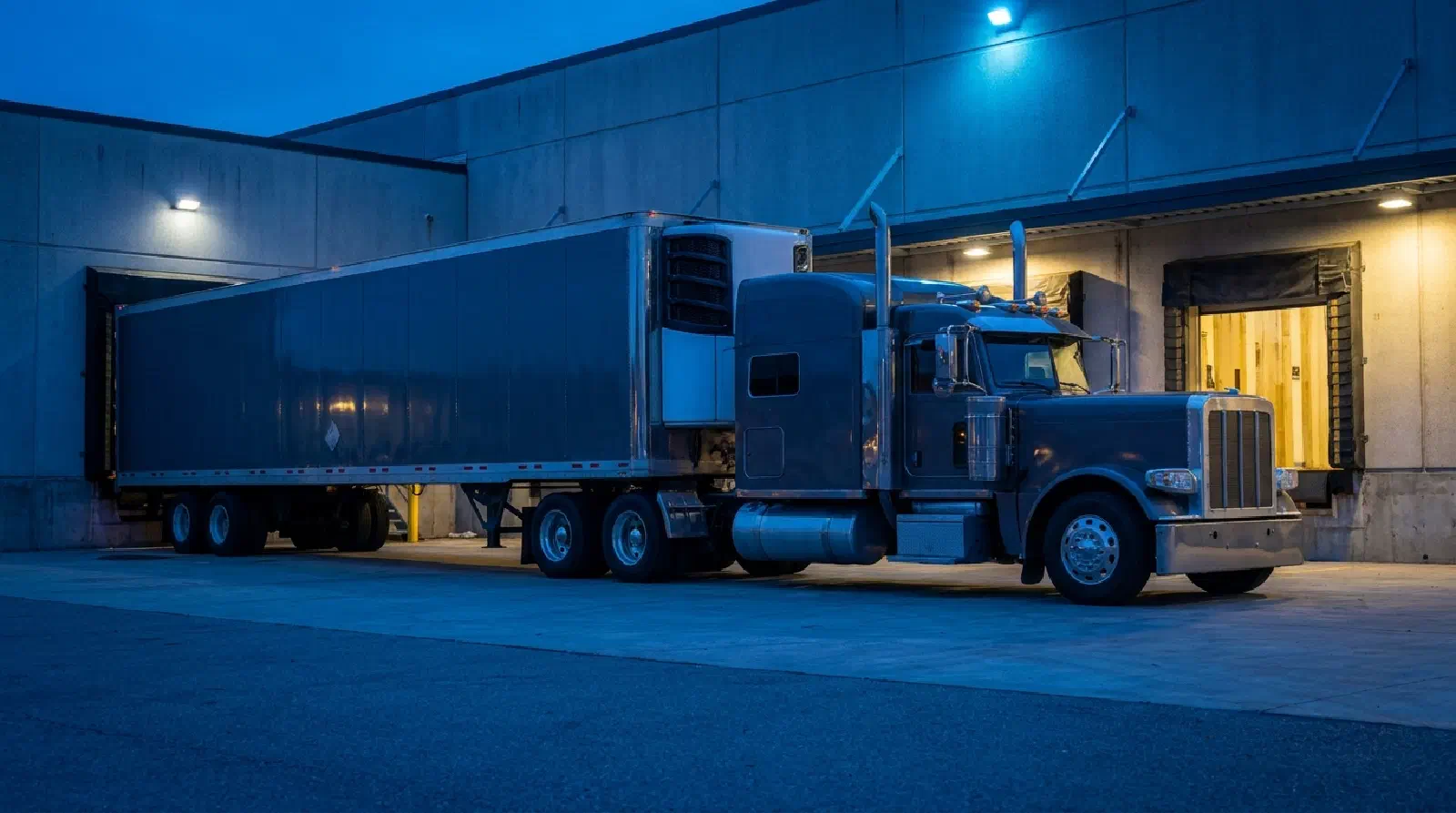
The most common equipment for temperature-controlled shipping over the road is a refrigerated trailer, commonly called a reefer. Reefer trailers can typically maintain anywhere from minus 20 degrees Fahrenheit to 80 degrees Fahrenheit, which gives shippers a wide range of flexibility across frozen, chilled, and ambient-controlled requirements.
Not all reefer trailers are built the same. Deeply frozen products like ice cream require trailers with thicker insulated walls and more powerful refrigeration units. Fresh produce may require precise humidity control in addition to temperature management. Pharmaceuticals often require continuous monitoring with data loggers that record temperature at set intervals throughout the entire transit.
Reefer LTL
For shippers who do not have enough volume to fill a full reefer trailer, temperature controlled LTL shipping is available through specialized carriers who maintain refrigerated LTL networks. The tradeoff is that your freight will share trailer space with other temperature-sensitive shipments, which means the carrier must manage compatible temperature zones within the same trailer. Not all reefer carriers offer LTL service, and those that do typically operate on more limited lane networks than standard LTL carriers.
Controlled Atmosphere and Passive Systems
For certain products, active refrigeration is not the only option. Insulated packaging, dry ice, gel packs, and phase change materials can maintain controlled temperatures for shorter transit windows without requiring a reefer unit. These passive systems are common in pharmaceutical last-mile delivery and small-volume food shipments where the transit time is short enough for passive cooling to hold the required range.
Where Cold Chains Break Down
Understanding where temperature excursions happen is as important as understanding the equipment used to prevent them.
Temperature controlled shipments require tight coordination at every handoff. A delay at pickup, a missed appointment, or a breakdown in communication can lead to temperature excursions, product loss, and compliance risk.
The most common failure points are pre-cooling, dwell time, and carrier communication. A trailer that has not been pre-cooled to the required temperature before loading will absorb heat from the product during the loading process. Freight that sits on a dock for an extended period between carrier legs is exposed to ambient temperature. A carrier who does not receive clear temperature instructions or does not monitor the unit during transit creates risk that the shipper only discovers at delivery.
Cold chain breakdowns can cause profitable items to become worthless. Research shows that if a cold room temperature increases by only two degrees Fahrenheit, the relative humidity drops approximately seven percent, which can reduce produce shelf life by 50 percent.
For pharmaceutical and food shippers, the consequences extend beyond product loss. Regulatory non-compliance, FDA violations, and retailer chargebacks all compound the direct cost of a temperature excursion. Documentation gaps, where you cannot prove continuous temperature compliance throughout the shipment, can void product liability coverage and make recalls more difficult to manage.
Regulations Shippers Need to Know
Food shippers operating in the United States are subject to the FDA Food Safety Modernization Act, specifically the Sanitary Transportation of Human and Animal Food rule, which sets requirements for equipment, temperature monitoring, carrier training, and documentation for food in transit. Pharmaceutical shippers face even more stringent requirements under Good Distribution Practice guidelines, which govern how temperature-sensitive medications must be stored and transported to maintain efficacy and patient safety.
These regulations are not just compliance checkboxes. They define the minimum standard of care for your product in transit and create documentation requirements that your logistics partner must be equipped to meet. If your temperature controlled shipping partner cannot provide continuous temperature records and chain of custody documentation for every shipment, that is a gap that creates real legal and commercial exposure.
What to Look for in a Temperature Controlled Shipping Partner
Carrier vetting matters more in temperature-controlled shipping than in any other freight category. A carrier with poor equipment maintenance, untrained drivers, or inadequate monitoring technology puts your product and your compliance at risk on every load.
In 2026, refrigerated freight brokers are leveraging real-time tracking and exception management to predict capacity constraints and improve delivery time accuracy, translating to more reliable quotes, fewer delays, and better outcomes for shippers navigating a tight reefer capacity market.
Ask your broker or 3PL how they vet reefer carriers specifically. What maintenance records do they require? What temperature monitoring technology do the carriers in their network use? How do they handle exceptions when a temperature alert fires during transit?
Visibility is non-negotiable. Proactive exception management allows issues to be addressed before they impact product integrity. When a shipment deviates from plan, you need to know immediately, not at delivery. A logistics partner who cannot provide real-time temperature visibility and proactive exception communication is not equipped to manage cold chain freight responsibly.
Also consider the full scope of the cold chain. Temperature controlled freight does not always move under refrigeration from origin to final delivery. It may move through a drayage leg from port, through a warehousing stage, and then via LTL or full truckload to its destination. Each leg needs to be managed under the same temperature standard. A logistics partner who can coordinate across all of those modes through a single point of accountability removes the risk that comes from handoffs between providers who are not communicating with each other.
Final Takeaway
Temperature controlled shipping is one of the highest-stakes categories in freight. The margin for error is narrow, the regulatory requirements are real, and the consequences of a failure run well beyond the cost of a single spoiled load. Shippers who invest in the right carrier network, the right visibility tools, and the right logistics partner will protect their product, their compliance, and their customer relationships consistently.
At HighQ Logistics, our temperature controlled shipping service covers the planning, carrier vetting, and real-time oversight that cold chain freight requires. If you are moving temperature-sensitive cargo and want to understand what proper cold chain management looks like in practice, talk to the HighQ Logistics team or request a freight quote to get started.
Frequently Asked Questions
What is temperature controlled shipping?
Temperature controlled shipping is the transportation of goods within a specific temperature range from origin to destination. It is used for products that would spoil, degrade, or become non-compliant if exposed to temperatures outside their required range, including food, pharmaceuticals, vaccines, and certain chemicals.
What temperature range can reefer trailers maintain?
Most reefer trailers can maintain temperatures from minus 20 degrees Fahrenheit up to 80 degrees Fahrenheit, covering frozen, chilled, and ambient-controlled freight. The specific capability varies by trailer type and refrigeration unit, so it is important to confirm equipment specifications match your product requirements before booking.
What is the cold chain and why does it matter?
The cold chain is the continuous temperature-controlled environment that must be maintained throughout every stage of a shipment, from origin through transit to final delivery. If the cold chain is broken at any point, even briefly, product integrity and regulatory compliance can both be compromised.
Where do most temperature excursions happen in transit?
The most common failure points are pre-cooling before loading, dwell time on docks between carrier legs, and inadequate monitoring or communication during transit. These handoff points between stages of the supply chain are where most cold chain breakdowns occur.
What regulations apply to temperature controlled shipping for food and pharma?
Food shippers in the US are subject to the FDA Food Safety Modernization Act’s Sanitary Transportation rule, which sets requirements for equipment, temperature monitoring, and documentation. Pharmaceutical shippers must comply with Good Distribution Practice guidelines governing temperature management and chain of custody documentation throughout the supply chain.
How do I know if my logistics partner can handle cold chain freight responsibly?
Ask specifically how they vet reefer carriers, what temperature monitoring technology their carriers use, how they handle temperature alerts during transit, and whether they can provide continuous temperature records and chain of custody documentation for every shipment. A provider who cannot answer these questions clearly is not equipped for cold chain freight.
Can temperature controlled freight move via LTL?
Yes. Refrigerated LTL service is available through specialized carriers who maintain temperature-controlled LTL networks. The tradeoff is that your freight shares trailer space with other compatible shipments, and reefer LTL networks operate on more limited lane coverage than standard LTL.