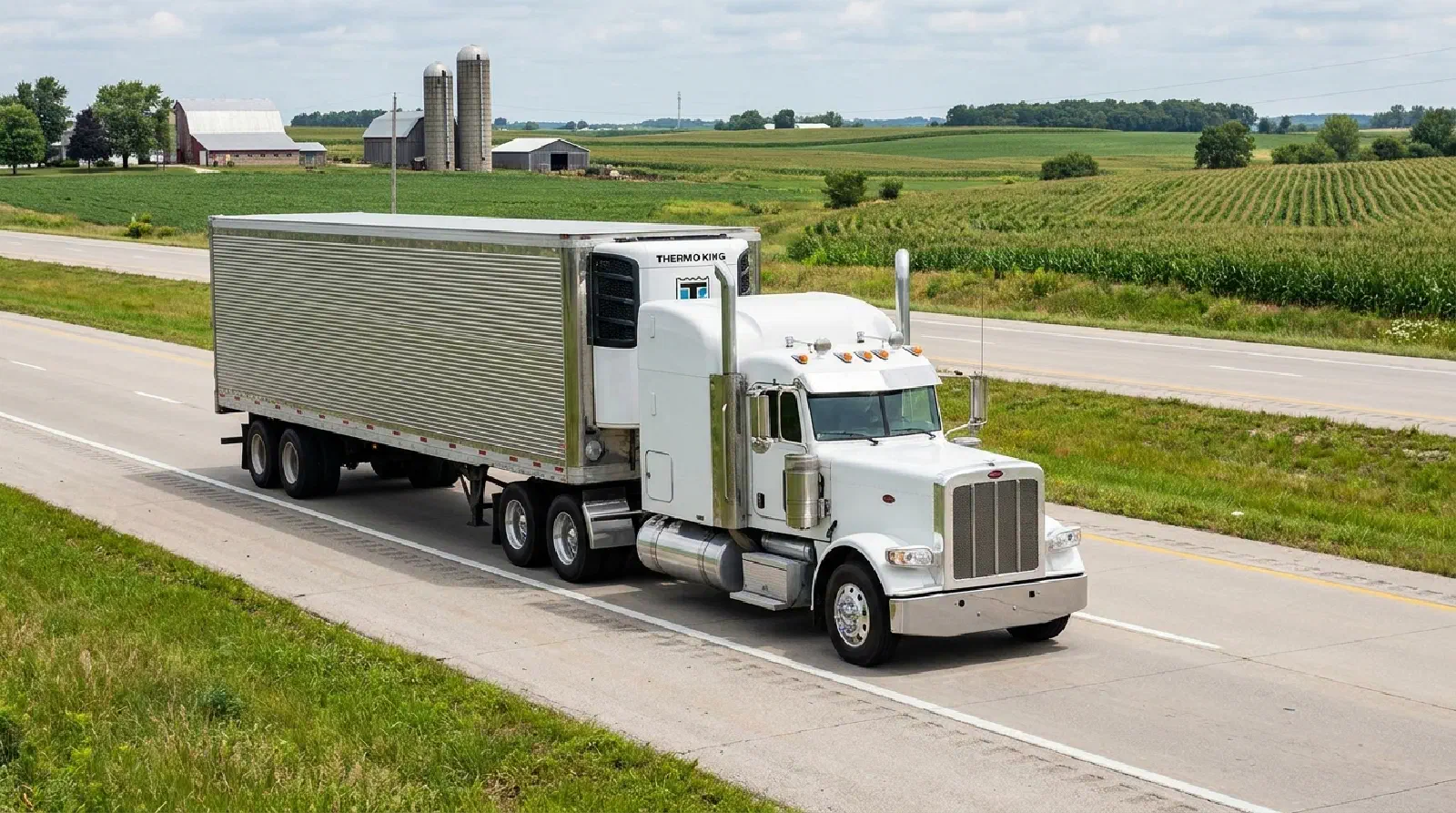
Reefer Capacity Shortage 2026: What Shippers Should Do
Of every segment in the truckload market right now, refrigerated freight is the tightest. While dry van and flatbed are both running hot, the reefer capacity shortage in 2026 has reached levels the market has not seen in years. For shippers moving food, beverage, or temperature-sensitive freight, this is not a future risk to plan around. It is a present-day reality that is already affecting bookings, rates, and delivery windows.

How Tight Is the Reefer Market Right Now
The numbers tell the story clearly. Segmenting tender rejection rates by equipment type shows that the reefer market is much tighter than the dry van market. Rejection rates are 11.5 percent, 18.5 percent, and 9.0 percent for dry van, reefer, and flatbed respectively. Shippers are extending lead times, reflecting concern that capacity may not be available.
That gap is significant. Reefer rejections running at roughly double the dry van rate means a refrigerated load is meaningfully more likely to be turned down by a contracted carrier than a standard dry van shipment right now.
The trend has been building for months. Reefer tender rejections spiked in line with produce and summer peak season demand. Rejection rates declined significantly through April to a new 2026 low of 13.34 percent before rapidly rising 4.75 percentage points during Roadcheck Week. Continued produce demand is expected to fuel additional routing guide volatility through at least the second quarter.
Why Reefer Capacity Is Tighter Than Dry Van
The Reefer Fleet Did Not See the Same Capacity Influx
The reefer market did not have the massive capacity influx that dry van had following the COVID freight boom. The reefer fleet has remained comparatively smaller and more specialized, which means there is less buffer capacity to absorb demand spikes.
Dry van trailers are general purpose. Reefer trailers require specialized equipment, more maintenance, and carriers who are set up to operate and monitor refrigeration units. That specialization means the reefer fleet grows and shrinks more slowly than the broader truckload market.
Seasonal Produce Demand Is Compounding an Already Tight Market
The reefer market benefits from protect-from-freeze freight during colder months, and that segment historically did not see the same demand drop-off that dry van experienced. As produce season ramps into summer, that seasonal demand stacks directly on top of a fleet that was already operating with less slack than dry van.
The current freight market reflects sustained industrial demand across core sectors including machinery, transportation equipment, chemicals, and food production. This reinforces the view that industrial freight, LTL, and intermodal demand should remain on a constructive path through the current cycle, with food production volumes contributing directly to reefer demand.
Roadcheck and Regulatory Enforcement Hit Reefer Hard Too
The same regulatory pressures tightening the broader truckload market apply to reefer carriers as well. Trucking capacity continues to tighten, driven by ongoing carrier exits, regulatory pressures on drivers including English proficiency rules and non-domiciled CDL restrictions, and ELD enforcement. Reefer carriers are not exempt from any of these pressures, and given the smaller size of the specialized fleet, the impact of losing even a modest number of trucks is felt more acutely.

What This Means for Cold Chain Shippers
The practical impact of the reefer capacity shortage shows up in three places.
Bookings take longer and require more lead time.
Shippers are extending lead times, reflecting concern that capacity may not be available when needed. Last-minute reefer bookings are increasingly difficult to cover without paying a significant premium, and in some cases may not be coverable at all on short notice.
Routing guide failures are more frequent for refrigerated freight.
With reefer rejections running at roughly double the dry van rate, contracted carriers are more likely to decline refrigerated loads, pushing shippers onto the spot market where reefer premiums are typically higher than dry van premiums during tight periods.
Cold chain integrity risk increases when bookings are rushed.
When a shipper is scrambling to find any available reefer at the last minute, the careful carrier vetting that temperature controlled shipping requires can get skipped under time pressure. A rushed booking with an unfamiliar carrier increases the risk of equipment that has not been properly maintained, pre-cooling that was not verified, or monitoring that does not meet the shipper’s standards.
How Shippers Can Adapt to the Reefer Capacity Shortage
Build longer lead times into reefer planning now.
If your team has been booking reefer freight on the same timeline as dry van, that timeline needs to extend. Treating refrigerated freight as requiring earlier planning is no longer optional in this market.
Secure contracted reefer capacity rather than relying on the spot market.
With reefer rejections this elevated, spot market reefer freight carries a premium on top of an already inflated truckload market. Locking in contracted temperature controlled coverage with carriers who have a track record of honoring tenders protects both cost and reliability.
Work with a broker who has a deep reefer-specific carrier network.
NNot every carrier in a broker’s general network operates reefer equipment, and not every reefer carrier meets the standards required for sensitive cold chain freight. A logistics partner with established relationships specifically in refrigerated carriers has more options to draw on when capacity tightens, and has already done the vetting that rushed bookings tend to skip.
Consider whether some freight can shift modes.
Not all temperature-sensitive freight requires a dedicated reefer truckload. For smaller volumes, temperature controlled LTL through specialized carriers may offer more flexibility during periods when full reefer trailers are hardest to secure.
Build in buffer time for delivery windows where possible.
If your customer commitments allow any flexibility, building in additional transit buffer reduces the pressure to accept a rushed, unvetted reefer booking when your primary coverage falls through.
How Long Will the Reefer Market Stay Tight
Continued produce demand is expected to fuel additional routing guide volatility through at least the second quarter, and the broader truckload market is not expected to see meaningful relief until at least after the July Fourth holiday. Reefer capacity, given its historically tighter baseline, is unlikely to ease faster than the broader market and may remain the most constrained segment through peak summer produce season.
Shippers with regular cold chain volume should plan their summer freight strategy assuming current reefer conditions persist, with contracted coverage and longer lead times as the operating norm rather than the exception.
Final Takeaway
The reefer capacity shortage in 2026 is real, it is measurable, and it is currently the tightest segment of an already historically tight truckload market. For shippers moving temperature-sensitive freight, the response is not to wait for conditions to ease. It is to build longer lead times, secure contracted coverage, and work with a partner who has the reefer-specific carrier relationships and vetting standards that this kind of freight demands.
At HighQ Logistics, our temperature controlled shipping service is built on a vetted network of refrigerated carriers, even in tight market conditions. If your cold chain freight is harder to book than it used to be, talk to the HighQ Logistics team or request a freight quote and we will help you plan around it.
Frequently Asked Questions
Why is the reefer market tighter than the dry van market right now?Reefer tender rejection rates are running at roughly double the dry van rate. This is because the reefer fleet did not see the same capacity influx that dry van saw after the pandemic, reefer equipment is more specialized and slower to scale, and seasonal produce demand adds pressure on top of an already smaller fleet.
What is a tender rejection rate for reefer freight?A tender rejection happens when a carrier declines a load offered under a contracted agreement. Reefer rejection rates have been running near 18.5 percent recently, compared to around 11.5 percent for dry van, meaning refrigerated loads are significantly more likely to be turned down by contracted carriers right now.
How should shippers adjust their booking process for refrigerated freight?Shippers should extend lead times for reefer bookings, secure contracted coverage rather than relying on the spot market, and work with brokers who have dedicated reefer carrier relationships. Last-minute reefer bookings are increasingly difficult to cover and carry a premium when they can be covered at all.
Does the reefer capacity shortage affect temperature controlled LTL too?Temperature controlled LTL operates through a more limited network of specialized carriers, so capacity constraints can affect it as well. However, for smaller volumes, LTL may offer more flexibility than securing a full reefer truckload during periods when dedicated reefer trailers are hardest to find.
What risks come with rushing a reefer booking during a capacity shortage?When shippers scramble to find any available reefer truck at the last minute, careful carrier vetting can get skipped. This increases the risk of working with a carrier whose equipment has not been properly maintained, whose trailer was not pre-cooled correctly, or whose temperature monitoring does not meet the standards the shipment requires.
How long is the reefer capacity shortage expected to last?Continued produce demand is expected to keep routing guide volatility elevated through at least the second quarter of 2026, with the broader truckload market not expected to ease until after the July Fourth holiday. Reefer capacity is unlikely to loosen faster than the broader market given its historically tighter baseline.
What can shippers do right now to protect cold chain deliveries?The most effective steps are building longer lead times into reefer planning, securing contracted capacity instead of relying on spot bookings, working with a broker that has a dedicated and vetted reefer carrier network, and building buffer time into delivery windows wherever customer commitments allow it.