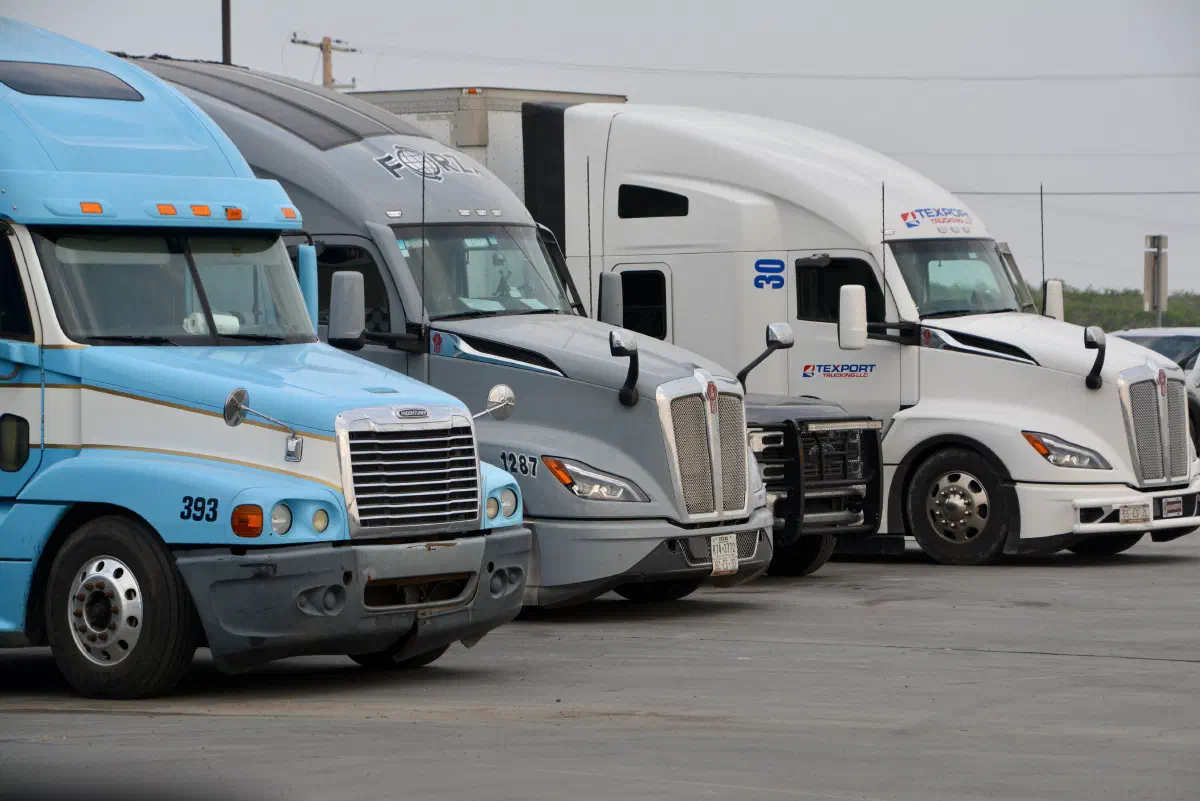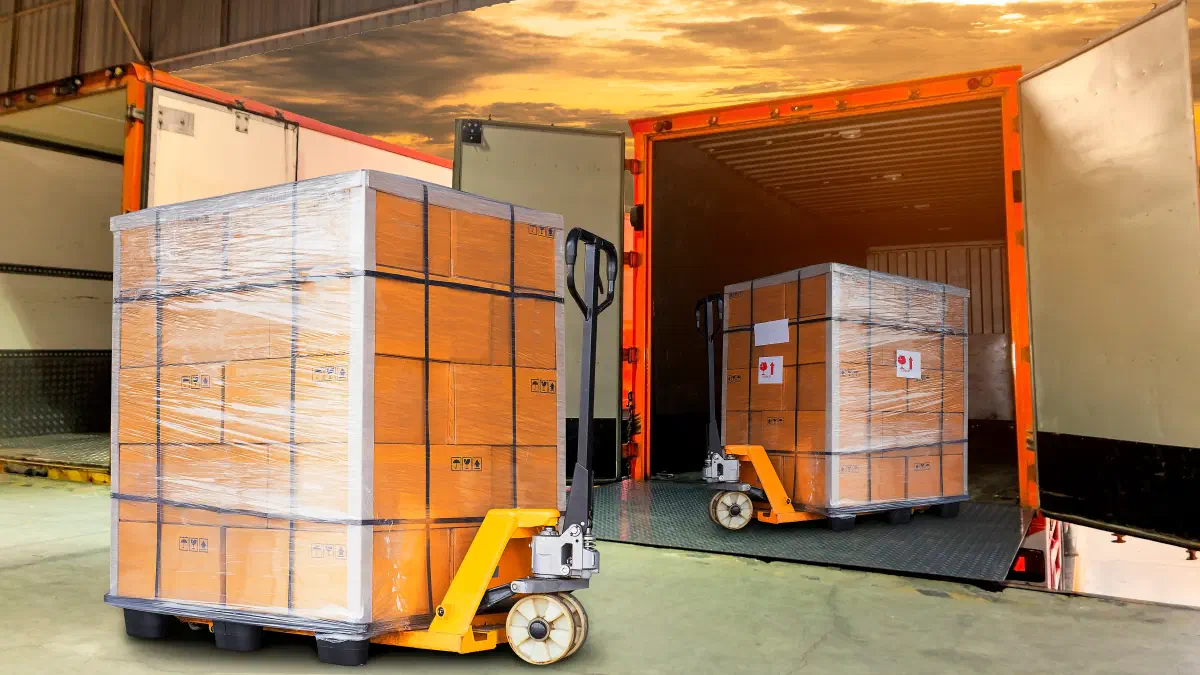
The freight market tightening that domestic shippers are experiencing right now is not just seasonal demand doing what it always does in Q4. There is a structural element underneath it: the US trucking carrier base is smaller than it was twelve months ago, and the capacity that left the market did not leave because conditions improved. It left because carriers could not sustain operations through a prolonged period of financial pressure. That capacity is not automatically coming back, and peak season 2026 is being run on a tighter network than peak season 2025 was.
The Numbers Behind the Capacity Contraction
Fleet counts across US trucking are running approximately 2 percent below year-ago levels as of mid-2026. That figure is an average across a highly fragmented industry, which means the actual contraction is concentrated in the smaller carrier segment, where the financial pressure has been most acute. The large national carriers, the ones with established networks, strong customer relationships, and access to capital, have been better positioned to absorb the cost increases and revenue fluctuations of the past few years. Smaller carriers, which make up the bulk of the available-capacity pool that shippers access through the spot market and broker networks, have exited at a higher rate.
The bankruptcy data is stark. FreightWaves documented at least 16 trucking carrier bankruptcies between late August and September 21, 2026 alone. That is not a full-year figure. That is a three-and-a-half-week window. Each bankruptcy represents an operator, or in some cases a regional fleet, that is no longer available to move freight. The trucks and trailers may eventually re-enter the market through sales or auction, but the drivers, the relationships, and the operational capability those carriers represented are gone from the available pool.
The post-COVID period produced a rapid expansion of the carrier base as rates spiked and the barrier to entry for new trucking operations looked low. Spot rates at historic highs attracted new entrants, and the market absorbed a large volume of new carrier registrations. As rates normalized and cost structures tightened, the carriers who entered at the top of the market found themselves operating at unsustainable margins. The bankruptcies happening now are, in part, the delayed reckoning for that expansion.
Why Departed Capacity Is Not Coming Back Quickly
When a carrier exits the market, the equipment can be repositioned relatively quickly. Trucks and trailers can be sold at auction, purchased by other operators, or acquired by larger carriers. But the operational capacity a carrier represents is not just the iron. It is the drivers, the dispatch knowledge, the maintenance relationships, the shipper relationships, and the carrier authority. Most of those elements take time to rebuild, and many do not come back at all.
Driver recruitment and retention continues to be a structural constraint on industry capacity. The commercial driver’s license pipeline has not kept pace with the industry’s needs, and the physical demands and lifestyle requirements of long-haul trucking continue to limit the available driver population. A carrier that goes bankrupt and auctions its equipment does not create a new driver with a CDL and years of experience. That capacity is simply gone.
The insurance market for trucking has become substantially more difficult and more expensive over the past several years. New entrant carriers face high insurance costs that are difficult to cover on thin margins, and established carriers have seen their premiums rise significantly. For carriers already operating at the margin, rising insurance costs have accelerated the decision to exit. This is not a problem that resolves when freight demand picks up, because the insurance cost structure is driven by factors largely independent of freight market conditions.
Equipment costs have also risen substantially. New tractors are more expensive than they were five years ago, and used equipment prices have remained elevated as the supply of quality used equipment tightened. For a smaller carrier weighing whether to invest in equipment replacement or exit the business, the math has pushed more operators toward the exit than would have left in a more favorable equipment market.
What This Means for Shipper Leverage
The shipper experience in a capacity-constrained market is fundamentally different from the experience in a loose market. In a loose market, carriers compete for freight. Shippers can play carriers against each other, decline loads and rebook at a lower rate, and generally assume that if one carrier cannot move the freight, another one will. In the current market, that dynamic is inverted on many lanes.
Tender rejection rates running near 14 percent are a direct measure of how often carriers are declining loads they have technically agreed to handle. When a carrier rejects a tender, the shipper has to re-enter the market for that load, typically at a higher rate on a tighter timeline. On lanes where rejection rates are elevated, the shipper is effectively negotiating from a weaker position with every load.
The shippers with the most leverage in this environment are not the ones with the largest freight volumes. They are the ones with the most predictable freight volumes. A carrier who can count on consistent weekly loads on a lane they run efficiently will prioritize that shipper over a high-volume shipper whose freight is unpredictable. Forecast accuracy and volume consistency are the currencies that matter in this market, and they matter more when capacity is tight than when it is plentiful.
Building and maintaining direct carrier relationships is also more valuable in a tight market. A shipper who has a carrier relationship that predates the current tightening is in a different position than one who relies primarily on the spot market for capacity. The carriers who are in the market right now survived a difficult period, and they are managing their capacity with preference to the relationships they built through that period.
What Shippers Should Do With This Information
The capacity situation is not going to resolve itself before the end of the year. November and December are going to be run on a tighter network than last year, and the shippers who navigate it best will be those who got in front of it before the peak arrived, not those who tried to manage it reactively.
The first priority is relationship inventory. Which carriers move your freight regularly, and what is the state of those relationships? Carriers who know your freight, your shipping locations, and your requirements are the ones most likely to prioritize your loads when capacity is constrained. A quick check-in with your primary carriers, sharing your November and December volume expectations, signals to those carriers that you are a shipper worth planning around.
The second priority is backup coverage. For every critical lane, the question to answer right now is: if your primary carrier rejects a tender in week three of November, who is the backup, and have you confirmed they have capacity? Identifying backup coverage before it is needed costs almost nothing. Discovering you do not have it after a rejection, with a time-sensitive load sitting on the dock, is expensive in ways that go beyond the rate.
The Longer View
The capacity contraction in US trucking is a multi-year story, not a single-quarter event. The carriers that exited the market over the past year or two are not going to return in time to affect peak season 2026. The question for the industry is how long it takes for the remaining carrier base to attract enough new drivers, investment, and operational capacity to fully satisfy demand.
There is no clear short-term answer to that question. Driver recruitment remains difficult. Equipment costs are high. The insurance market for trucking is not getting easier. These are structural headwinds, and they will keep the carrier base from expanding as quickly as demand might require. Shippers who understand this are planning their carrier relationships accordingly, treating capacity as a resource to secure and manage rather than a commodity that will always be available at a price.
The freight capacity available to domestic shippers in November and December 2026 is structurally smaller than it was a year ago. Fleet counts are down, carrier bankruptcies have accelerated, and the capacity that exited the market through those bankruptcies is not returning on a timeline that helps with peak season. Shippers who plan around this reality, building direct carrier relationships, confirming backup coverage, and sharing accurate volume forecasts, will be in a better position than those who assume the market will find a way to move their freight at an acceptable price and on an acceptable timeline.
Frequently Asked Questions
How much has US trucking capacity actually shrunk?
Fleet counts across US trucking are running approximately 2 percent below year-ago levels as of mid-2026. That is an industry average, and the contraction is concentrated in smaller carriers, which make up the bulk of available spot market capacity. FreightWaves documented at least 16 trucking carrier bankruptcies between late August and September 21, 2026 alone, reflecting the pace at which smaller operators have been exiting the market.
Why are carriers going bankrupt if freight demand is strong?
Carrier bankruptcies in 2026 are largely the delayed result of a difficult multi-year period during which freight rates were soft and operating costs were rising. Many smaller carriers who entered the market during the 2021 to 2022 rate boom did so at unsustainable cost structures. As rates normalized and costs continued to rise, those carriers ran out of runway. The bankruptcy wave is the reckoning for that over-expansion, playing out now as market conditions have tightened again.
Will capacity come back after peak season?
Equipment can re-enter the market relatively quickly through auctions and resales when conditions improve. But the drivers, operational knowledge, and relationships that bankrupt carriers represented are not automatically restored. Driver recruitment remains a structural constraint, and the insurance and equipment cost environment means the barrier to re-entering the market is higher than it was when many of these carriers launched. A full recovery in the carrier base is a multi-year process, not a seasonal adjustment.
How does carrier capacity affect the rates I pay?
In a capacity-constrained market, carriers have more pricing power. Tender rejection rates running near 14 percent mean carriers are declining roughly one in seven contracted loads, forcing shippers back into the spot market at higher rates and shorter timelines. Shippers who rely heavily on the spot market or who have not confirmed carrier coverage on their critical lanes are most exposed to the rate premium that accompanies a capacity shortage.
What gives a shipper the most leverage in a tight capacity market?
Predictability. Carriers value shippers whose freight is consistent, forecastable, and easy to plan around. A shipper who provides accurate weekly volume forecasts by lane, delivers on those forecasts, and maintains a reliable relationship with their carriers is prioritized over one who ships variably with no advance notice. In a market where carriers are choosing which loads to accept, being the shipper they plan around is worth more than volume alone.
Should I be worried about capacity for my specific lanes?
The tightest capacity right now is in the major distribution corridors: Southern California, Dallas, Chicago, Atlanta, Columbus, Memphis, and the New Jersey and Pennsylvania freight markets. Reefer equipment is also tight on lanes touching Pacific Northwest harvest origins. If your freight moves through these markets, confirming coverage and identifying backups now is more urgent than if you are shipping on less-contested lanes.