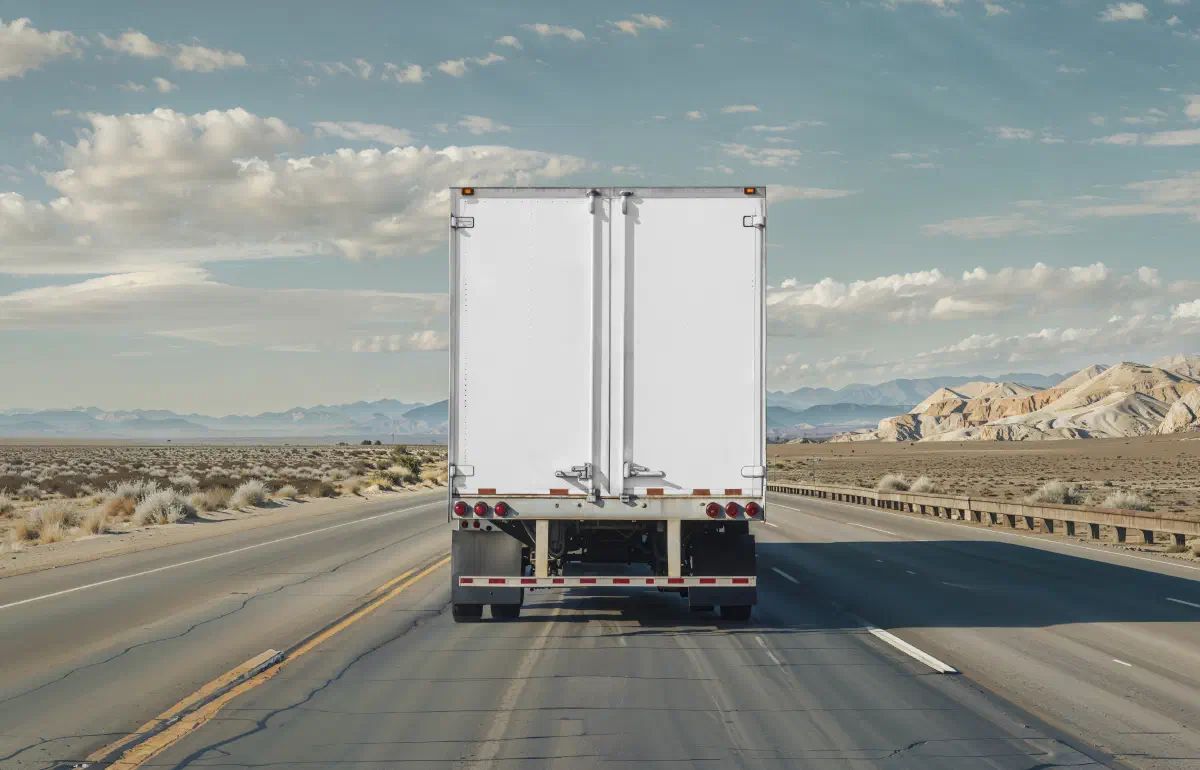
For years, autonomous trucking was the technology that was always five years away. That is no longer the case. In 2026, driverless trucks are hauling commercial freight on public US highways, not in test conditions, not with safety drivers, but in live commercial operations carrying paying customer loads. Federal legislation introduced this year would remove the regulatory barriers that have kept autonomous freight in a perpetual testing phase. Shipper interest has shifted measurably from the skepticism of 2022. The question for freight managers and supply chain leaders is no longer whether autonomous trucks are coming. It is what they actually mean for how freight moves, what it costs, and how the relationships between shippers, carriers, and brokers will evolve as commercial deployment scales.

What is actually operating right now
The gap between the press releases and the operational reality of autonomous trucking is smaller in 2026 than it has ever been, and it is worth understanding the difference between what is real and what is still projected.
Companies including Aurora, PlusAI, and Waabi have planned driver-out operations and factory-built autonomous trucks starting in 2026 as they expand routes and prepare for large-scale commercialization.
Aurora operates 10 validated commercial freight lanes across the Sun Belt. These are not test routes. They carry paying customer freight on public highways. Aurora tripled its driverless network to 10 routes across the Sun Belt by February 2026, validated a 1,000- mile lane from Fort Worth to Phoenix, and accumulated nearly 440,000 driverless miles with zero system-attributed collisions as of June 2026.
Gatik became the first company in North America to operate fully driverless trucks at scale for commercial deliveries, completing 60,000 orders incident-free with contracted revenue.
PlusAI has announced commercial agreements with freight carriers for supervised autonomous operations where a safety driver remains in the cab but is not actively driving. This is the standard deployment model for 2026. Full driverless commercial operations exist in limited geographic areas under specific permits.
The honest summary of where things stand is this. A small number of validated commercial routes are operating with fully driverless trucks in specific geographies, primarily Texas and the Sun Belt. A broader set of operations are running with safety drivers present but not driving. The next 12 months will determine whether commercial scale follows the early route validation or whether incidents, insurance challenges, or regulatory friction slow deployment further.
The federal legislation that changes the timeline
Representatives Bob Latta and Debbie Dingell released a bipartisan discussion draft of the SELF DRIVE Act of 2026, the first federal statute if enacted advancing autonomous vehicle regulations for trucking. The bill moves to dismantle regulatory roadblocks that have kept autonomous freight in a perpetual testing phase by allowing limited commercial operations while trucks are evaluated during their pilot stage.
The significance of federal legislation is that it removes the patchwork of state-by-state autonomous vehicle rules that has been one of the practical barriers to scaling driverless operations across interstate freight lanes. A truck that can legally operate driverless in Texas today may face different rules in Oklahoma, Kansas, or Missouri.
Federal standards would create a unified operating framework that makes transcontinental autonomous freight economically viable rather than just technically possible.
The bill is in discussion draft form as of early 2026 and its passage is not guaranteed. But its bipartisan sponsorship signals genuine Congressional momentum, and it reflects the same pattern that has driven previous transportation technology legislation from discussion to law over a 12 to 36-month window.
What this means for freight capacity
The most immediate practical implication of autonomous trucking for shippers is not the technology itself. It is the capacity it could add to a freight market that has been structurally short of drivers for years.
The autonomous trucks could account for up to 30 percent of new commercial vehicle registrations by 2035. Demand for fleet managers for autonomous vehicles has grown by 200 percent, while demand for traditional dispatchers has declined by 55 percent. The driver shortage itself may accelerate autonomous adoption, as the emphasis on reducing the driver pool over the last year will leave fewer legal, licensed drivers available when the freight market inevitably recovers.
The trucking driver shortage has been one of the structural capacity constraints driving the elevated freight rates of 2026. Autonomous trucks remain a relative drop in the bucket compared with the trucking industry’s existing workforce, but industry adoption of autonomous trucks will be an evolution, not a revolution.
The capacity that autonomous trucks are adding today is small relative to the overall market. Aurora’s 10 lanes and Gatik’s middle-mile operations do not materially change the national capacity picture that is currently driving record truckload spot rates. But the directional signal matters for planning horizons. If commercial autonomous freight scales from hundreds of trucks to tens of thousands of trucks over the next three to five years, as developers are projecting, the capacity implications for the freight market would be significant. Shippers making long-term supply chain decisions in 2026 are making them into a market that will look different by 2028 or 2030.
What autonomous trucks do and do not change for shippers today
It is worth being specific about what the current state of autonomous trucking actually changes for a shipper managing freight today, and what it does not.
What it does not change today: Spot truckload rates are at near-record levels and the driver shortage that is contributing to that tightness is not being materially offset by current autonomous deployments. Most shippers cannot access autonomous truck capacity directly. The validated lanes are narrow geographic corridors in the Sun Belt, and the carriers operating on them are not yet offering autonomous capacity broadly through freight brokers. Your LTL, full truckload, intermodal, and expedited freight programs are running on the same human-operated carrier network they were running on twelve months ago.
What it does change today: The long-term planning signal is real. If you are evaluating infrastructure investments, sourcing decisions, or distribution network design on a five-year horizon, the trajectory of autonomous freight is a relevant variable. Autonomous trucks are not coming in five years. Some are here now. By the end of 2026, meaningful fleets of autonomous semis will be operating commercially on major freight corridors. For companies running freight operations, the SELF DRIVE Act creates a timeline to plan around. Major shippers with consistent, predictable freight on Sun Belt lanes are the first candidates to incorporate autonomous capacity into their carrier mix as commercial availability expands.
The questions shippers should be asking
The most useful framing for autonomous trucking in 2026 is not excitement or skepticism. It is preparation. Here are the questions worth asking now while the technology is still early enough that the answers can shape how you engage with it as it scales.
Which of your freight lanes are most likely to qualify for autonomous service as it expands?
Autonomous trucks perform best on long, straight, predictable highway corridors with consistent volume. Sun Belt lanes, high-volume hub-to-hub routes, and lanes with predictable freight characteristics are the first candidates.
How does your current carrier mix handle technological transition?
A logistics partner who is actively monitoring autonomous freight deployment and maintaining relationships with carriers integrating the technology is better positioned to give you access to it when commercial availability expands than one who is not.
What does the liability picture look like for autonomous freight?
When an autonomous truck is involved in an incident, existing legal frameworks were not designed to allocate liability between software developers, hardware providers, truck manufacturers, and freight carriers. Several states are working on autonomous vehicle liability statutes, but the legal landscape remains uneven. Understanding how your freight agreements handle liability for autonomous operations is a practical question worth addressing before autonomous capacity becomes a significant part of your carrier mix.
Autonomous trucking crossed a meaningful threshold in 2026 from experimental to commercial. The volumes are small, the geographies are limited, and the full capacity implications are years away from maturity. But the direction is no longer in question, and the regulatory environment is moving to support faster deployment. For shippers, the right posture is informed preparation rather than either dismissal or urgency. Monitor the lanes and geographies where autonomous operations are expanding, understand the liability framework as it evolves, and work with a logistics partner who is watching this market as it develops so you are not making the transition without guidance.
At HighQ Logistics, we monitor freight market developments including autonomous trucking deployments alongside the LTL, truckload, and intermodal markets we manage freight through every day. If you want to talk through how the current and near-term capacity picture affects your freight program, talk to the HighQ team or get a freight quote.
Frequently Asked Questions
Are autonomous trucks actually operating commercially in 2026?
Yes. A small number of companies are operating driverless commercial freight on public US highways in 2026. Aurora operates 10 validated commercial freight lanes across the Sun Belt carrying paying customer loads with zero system-attributed collisions over 250,000 driverless miles. Gatik has completed 60,000 orders incident-free with fully driverless trucks for commercial deliveries. PlusAI is operating supervised autonomous operations where a safety driver is present but not driving. Full driverless operations are limited to specific geographies and routes under regulatory permits.
What is the SELF DRIVE Act of 2026?
The SELF DRIVE Act is a bipartisan federal discussion draft legislation introduced by Representatives Bob Latta and Debbie Dingell that would remove the regulatory roadblocks keeping autonomous freight in a perpetual testing phase. If enacted, it would allow limited commercial operations while trucks are evaluated during their pilot stage, creating a federal framework that would replace the patchwork of state-by-state autonomous vehicle regulations currently limiting interstate driverless operations.
Which freight lanes are best suited to autonomous trucks?
Autonomous trucks perform best on long, straight, predictable highway corridors with consistent and repeatable volume. Current commercial operations are concentrated in the Sun Belt, particularly in Texas and on hub-to-hub routes between major freight cities. The Fort Worth to Phoenix corridor, approximately 1,000 miles, has been specifically validated as a commercially viable autonomous route. High-volume lanes with predictable freight characteristics are the first candidates as deployment expands.
Does autonomous trucking affect freight capacity and rates today?
Not materially in 2026. Current autonomous deployments represent a small fraction of the overall trucking fleet and do not significantly offset the driver shortage driving elevated freight rates. Truckload spot rates remain near record highs and the structural capacity constraints of 2026 are not being resolved by current autonomous operations. The capacity implications will be significant if deployment scales to tens of thousands of trucks over the next three to five years, but that impact is a medium-term development rather than a current market force.
Can shippers access autonomous truck capacity directly today?
Not broadly. Autonomous freight capacity is currently available on a limited number of validated lanes in specific geographies through carriers with established autonomous programs. Most shippers cannot directly book autonomous truck capacity through their existing freight broker or carrier relationships. As commercial deployment expands and autonomous capacity becomes more widely available through carrier networks, access for general shippers will increase.
What are the liability implications for freight moving on autonomous trucks?
Existing legal frameworks were not designed to allocate liability between software developers, hardware providers, truck manufacturers, and freight carriers when an autonomous truck is involved in an incident. Several states are working on autonomous vehicle liability statutes, but the legal landscape remains uneven. Shippers whose freight may move on autonomous capacity should review how their freight agreements handle liability for operations involving automated driving systems.
How should shippers prepare for autonomous trucking without overreacting to early-stage deployments?
The right posture is informed preparation rather than urgency. Identify which of your freight lanes match the geographic and volume profile where autonomous operations are expanding. Monitor the regulatory environment through the SELF DRIVE Act and state-level developments. Review your freight agreements for liability provisions covering automated operations. Work with a logistics partner who tracks autonomous deployment as part of how they monitor the carrier market, so you have access to evolving capacity options as they become commercially available.