How Tariffs Affect Freight Costs for US Shippers
If you are importing goods or sourcing materials from overseas, you have already felt the pressure of tariff changes in 2026. But understanding how tariffs affect freight costs goes beyond the duty line on an invoice. Tariffs reshape entire supply chains, shift freight volumes between modes and lanes, and create ripple effects that reach domestic shippers who never import a single container.
What Tariffs Actually Do to Freight Costs
A tariff is a tax on imported goods, paid by the importer when the shipment clears customs. The tariff itself does not show up on your freight invoice as a line item. But it absolutely affects what you pay to move goods.
Higher tariffs drive up costs, create uncertainty in global markets, and force supply chain leaders to adjust sourcing, production, and transportation strategies. For shippers, even modest tariff adjustments can alter freight costs, disrupt established routes, and strain long-standing partnerships with carriers and suppliers.
The chain reaction works like this. Higher import costs push companies to reroute supply chains, change sourcing locations, or pull inventory forward to beat anticipated increases. Each of those decisions generates a surge in freight demand, which tightens capacity and drives up rates across every mode, including domestic LTL and full truckload lanes that have nothing to do with imports.
What Changed in 2026
The United States applied a temporary 10% tariff on most imports effective February 2026 under Section 122 of the Trade Act of 1974, aimed at addressing international payments imbalances. The short-term logistics consequences include re-pricing of freight tenders, changes to container routing, and increased customs queries. The medium-term effects include shifts in distribution patterns, regional warehousing expansion, and growth in nearshoring activity.
Steel tariffs have created additional pressure. Recent Section 232 tariff adjustments have reinforced that basic steel products still face a 50% tariff, while many derivative products are now subject to a 25% duty calculated on the full customs value of the imported goods, not just the proportional weight of the steel within them. For manufacturers and distributors who rely on steel components, this has created immediate cost exposure that runs well beyond the raw material cost.
From a logistics standpoint, exclusions and exemptions driven by national security or supply chain sensitivity can redirect freight flows, change carrier mixes, and require adjustments to inventory and routing strategies almost overnight.
How Tariffs Ripple Into Domestic Freight
This is the part that surprises many shippers. You do not need to import a single box for tariffs to affect your domestic freight costs.
When importers rush to front-load inventory before a tariff deadline, port volumes surge. Ports and trucking companies that work with ocean shippers are operating at maximum levels when container capacity is high, and any disruption to the import flow will rapidly create a very messy situation for domestic capacity downstream.
That congestion backs up into the inland transportation network. Tariffs often cause companies to rethink where and how they source goods, leading to longer lead times, added complexity in customs clearance, and unexpected delays that affect downstream fulfillment.
Domestic shippers then compete for the same truckload and LTL capacity that importers are flooding into the market. Rates go up, tender acceptance drops, and shippers who do not have strong carrier relationships find themselves scrambling for coverage.
The Modes Most Affected Right Now
Truckload and LTL. Domestic capacity is tightening as tariff-driven inventory moves compete for available trucks. LTL rates are already climbing in 2026, and tariff-driven freight surges will add further pressure on available capacity and spot market pricing.
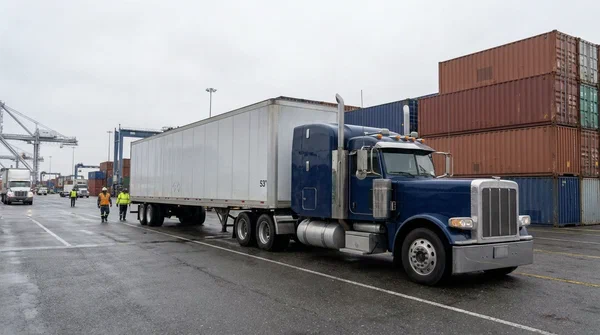
Drayage. Port-adjacent freight is feeling the most direct impact. Clustered vessel arrivals, chassis split signals, and seasonal constraints are influencing inland timing and execution reliability at major gateways. Shippers relying on drayage to move containers from port need to plan further ahead than they did a year ago.
Intermodal. Intermodal freight is gaining momentum as high diesel prices, new regulations, and truckload capacity constraints push shippers toward rail. For shippers with qualifying lanes, intermodal shipping is one of the most effective ways to insulate freight costs from tariff-driven truckload volatility.
What Smart Shippers Are Doing Right Now
Building scenario budgets. Companies are using scenario-based budgeting processes that provide freight cost projections based on which tariff outcome occurs, rather than committing to a single forecast in an environment this unpredictable.
Locking in contract rates early. Spot market exposure is the most dangerous position in a tariff-driven capacity surge. Shippers with contracted rates through a managed transportation partner have protection that spot-reliant shippers do not.
Auditing freight invoices. Tariff-driven disruption creates more billing errors, incorrect accessorial charges, and reclassification fees. A freight audit process catches those errors before they compound across dozens of shipments.
Diversifying carrier relationships. A broad, vetted carrier network is the single best buffer against capacity tightening. Shippers managing freight through only one or two relationships are most exposed when those carriers reject tenders in a tight market.
How HighQ Logistics Helps Shippers Navigate Tariff Uncertainty
Tariff policy changes faster than most companies can adjust their freight programs. At HighQ Logistics, we monitor market conditions daily and help our shippers build freight strategies that hold up across multiple scenarios, not just the current moment.
Whether you need help locking in contract rates, evaluating intermodal as a cost buffer, or getting a freight audit to recover what tariff disruption may already be costing you, we are built for exactly this kind of market. Talk to the HighQ team and we will give you a straight read on where your freight program stands.
Final Takeaway
Understanding how tariffs affect freight costs means looking beyond the duty itself. The real impact shows up in tighter capacity, higher domestic rates, disrupted carrier relationships, and supply chains that have to move faster than anyone planned. The shippers who come out ahead in 2026 will be the ones with strong carrier networks, contracted rates, and a logistics partner who can see the market clearly and move quickly when conditions shift. That is what HighQ Logistics is built to do.