Typhoon Dolphin Disrupted China’s Biggest Ports
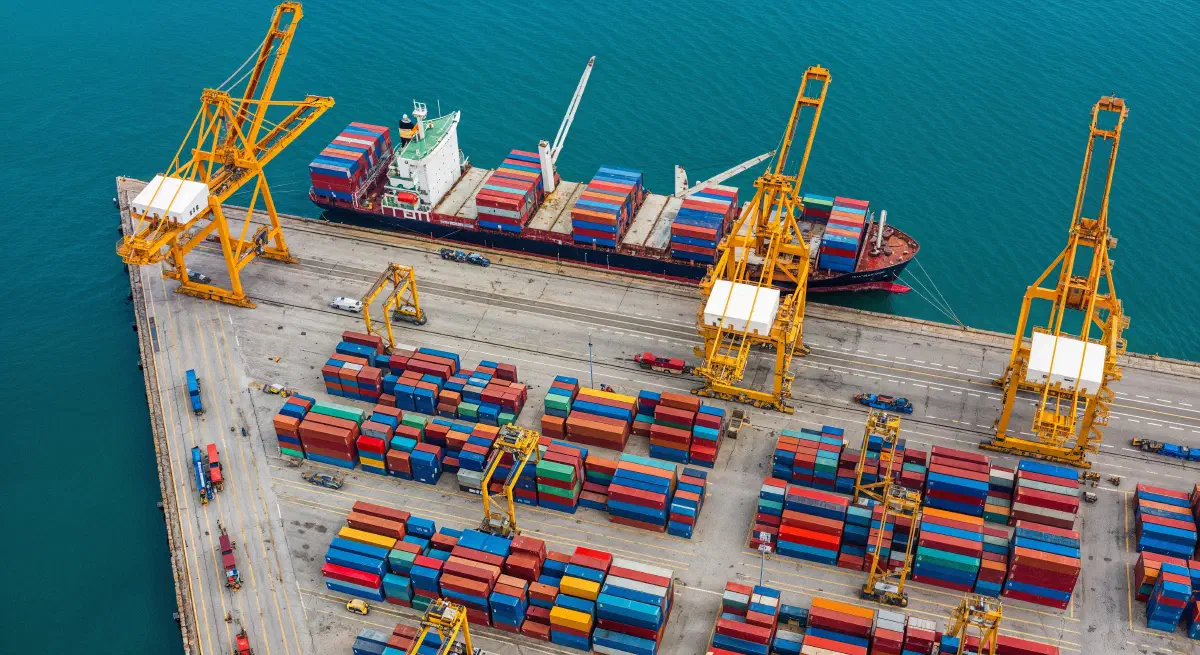
The freight market was already navigating elevated rates, Strait of Hormuz tensions, and a compressed Q4 planning window when Typhoon Dolphin made landfall along China’s east coast in early August. The storm, the strongest to hit China this year and the third typhoon to strike the east coast in five weeks, forced the ports of Shanghai and Ningbo to suspend terminal operations simultaneously. More than 2.4 million TEUs of container capacity were stranded across North Asia in the aftermath. Shanghai-US East Coast rates crossed $10,000 per 40-foot container in the days that followed. The vessel backlog at the world’s two busiest container ports is expected to take weeks to clear.
For shippers importing from China, this is not a distant weather event. It is an active disruption to the containers, transit times, and freight costs that govern inbound inventory for the rest of August and into September.
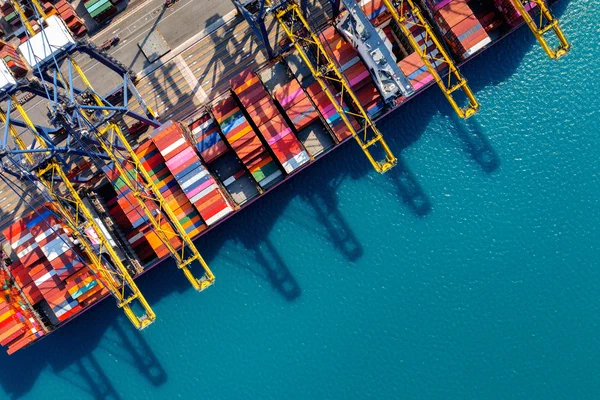
What happened and when
Typhoon Dolphin reached China’s east coast in early August, forcing Ningbo to suspend container gate operations, feeder services, and vessel movements from August 7. Shanghai’s Yangshan and Waigaoqiao terminals suspended operations on Friday August 8. The storm brought 90-mile-per-hour winds and torrential rainfall across the Yangtze River Delta, with flooding extending north toward Beijing and west into Hubei province.
China endured its strongest storm of the season, with ports in Shanghai and Ningbo experiencing three-day closures across multiple container terminals. Typhoon Dolphin was the third tropical storm to hit China’s east coast in the past five weeks.
More than 2.4 million TEUs of container capacity were stranded across North Asia as of the Monday following the storm. By August 12, vessel waiting times at Ningbo averaged 2.26 days, up nearly 15 hours from the previous week. At Shanghai the situation was more acute, with the 7-day average waiting time reaching 3.95 days, vessel arrival delays at 5.63 days, and departure delays at 5.37 days.
The congestion spread beyond Shanghai and Ningbo. With port congestion spreading toward southern China to hubs like Qingdao and Shenzhen, analysts estimated it will take a few weeks to clear the vessel backlog. Berth waiting times at some Shanghai terminals reached up to 12 days in the days immediately following the storm.
Why this disruption is harder to absorb than usual
Every port disruption creates a backlog. What makes the Typhoon Dolphin situation more challenging than a typical weather event is the context it landed into.
Chinese ports had already been dealing with congestion from two previous typhoons, Bavi and Noul, which struck in July. Terminal operations, container positioning, and vessel schedules had not fully normalised from those earlier events before Dolphin arrived. The vessel backlog at Shanghai and Ningbo is therefore building on top of a network that was already absorbing strain rather than one that had returned to baseline operations.
At the same time, the Q4 import season is beginning to build. Shippers who need inventory on US shelves for the holiday peak typically begin booking China-origin freight in late July and August. Those bookings are now competing for capacity on a network where 2.4 million TEUs of container capacity are caught in congestion and carriers are managing schedule volatility across multiple affected ports.
The bottlenecks are a boon for shipping lines active on the transpacific. Shanghai to US West Coast rates are still holding above $7,000 per 40-foot container, while Shanghai to US East Coast has passed the $10,000 per 40-foot mark. Those are rates that would have been considered extreme even at the height of the 2021 freight surge, and they are arriving into a Q4 planning window that shippers had hoped would involve modestly softer pricing than the June peak.
What shippers with China-origin freight should do right now
The disruption is real and the timeline for resolution is measured in weeks, not days. Here is the practical response for shippers managing China-origin freight right now.
Contact your freight partner immediately for shipment-specific guidance.
Every shipper’s exposure to the disruption is different depending on which port their freight is moving through, which carrier and service they are booked on, and whether their freight was already in transit, waiting at a terminal, or not yet loaded. Your logistics partner should be providing specific guidance on your shipments rather than general market commentary.
Expect rolled cargo and revised cut-offs.
When terminals are congested and vessel schedules shift, carriers roll cargo from one sailing to the next. If you have freight waiting to be loaded at Shanghai or Ningbo, it may not move on the originally booked sailing. Even after terminals reopen, vessel bunching, berth congestion and schedule changes can continue to affect container availability, connections and transit times throughout the network.
Build additional transit buffer into your delivery planning.
The congestion is expected to take several weeks to clear. Freight that departs Shanghai or Ningbo in the week of August 17 is sailing on a network where vessel schedules are still being rebuilt after three back-to-back typhoon disruptions. Any delivery commitment built around standard transit time assumptions needs to be reviewed against the current congestion picture.
Evaluate air freight for the most urgent inventory.
For shippers whose Q4 inventory includes items with hard restock deadlines, the option of converting a portion of ocean freight bookings to air cargo is worth reviewing now rather than after a missed delivery window forces the conversion at higher cost. Global air cargo spot rates are down 6 percent month over month as of mid-August, making the relative cost comparison more favourable than it was in June. Air freight is still expensive. It is less expensive relative to ocean than it was two months ago.
Monitor the new Section 301 tariff implications.
A new 12.5% Section 301 tariff took effect on covered China-origin products this month after the Section 122 surcharge expired. Shippers with affected product categories are managing both a port disruption and a tariff change simultaneously. The combination of delayed transit times and changed duty rates requires a review of total landed cost on affected shipments to confirm whether the economics of specific orders still work as planned.
The Rhine River situation adds a European dimension
For shippers with European supply chains, congestion fears at Asian ports are creating a cargo shift to road and rail as the Rhine River has become described as unnavigable, adding further complexity to multimodal freight planning across Europe. While this primarily affects European shippers directly, US importers sourcing from European suppliers may see secondary effects if European capacity is absorbed by inland modal shifts away from Rhine waterways.
What comes next
The immediate priority for terminal operators is working through the vessel backlog that accumulated during the three-day closures. Analysts estimate several weeks for congestion to fully clear, though individual services and terminals will recover at different rates. Shippers on services calling Qingdao and Shenzhen, where congestion has spread from the primary affected ports, should monitor their specific service performance rather than assuming the clearance timeline applies uniformly across all China port positions.
Ocean freight rates on the transpacific will remain supported by the disruption for as long as congestion restricts effective capacity. The sustained rate pressure from three typhoons in five weeks, combined with Strait of Hormuz tensions, means the modest rate softening that occurred in late July has been effectively reversed. Shippers who were waiting for rates to soften further before locking in Q4 ocean freight arrangements are now looking at a market where that softening window has closed.
At HighQ Logistics, we are monitoring the China port situation and its implications for import schedules and domestic freight programs daily. If you have China-origin freight affected by the Typhoon Dolphin disruption or want to understand how the current ocean market affects your Q4 import plan, talk to the HighQ team or get a freight quote.
Typhoon Dolphin stranded 2.4 million TEUs at China’s two largest ports in the third week of August and pushed transpacific freight rates to levels that rival the peaks of the 2021 surge. The vessel backlog will take weeks to clear, cargo rolled from affected sailings will compress August and September schedules, and the Q4 import window is narrowing faster than most shippers planned. Freight with China-origin exposure needs active management right now, not after the congestion has already pushed delivery dates past what customers expect.
Frequently Asked Questions
What did Typhoon Dolphin do to shipping?
Typhoon Dolphin, the third and strongest typhoon to hit China’s east coast in five weeks, forced the ports of Shanghai and Ningbo to suspend terminal operations in early August 2026. The closures stranded more than 2.4 million TEUs of container ship capacity across North Asia and created congestion that spread to ports across southern China. Vessel waiting times at Shanghai reached nearly four days on average, with some berths reporting waits of up to 12 days.
How much have ocean freight rates increased because of Typhoon Dolphin?
Shanghai to US West Coast rates held above $7,000 per 40-foot container following the disruption, while Shanghai to US East Coast rates crossed $10,000 per 40-foot container. These levels reversed the modest rate softening that had occurred in late July and represent some of the highest transpacific rates recorded this year.
How long will the port congestion from Typhoon Dolphin last?
Analysts estimate it will take several weeks for the vessel backlog to clear across Shanghai, Ningbo, and the southern China ports where congestion has spread. Terminal operations at Ningbo and Shanghai resumed after three-day closures, but post-reopening vessel bunching, container gate-in delays, and revised vessel windows are expected to keep transit times elevated for an extended period.
What is rolled cargo and why does it matter?
Rolled cargo occurs when a carrier moves a booking from one sailing to the next because there is no available space on the originally scheduled vessel. Port congestion causes cargo to be rolled more frequently because more shipments are competing for fewer available slots while terminals work through the backlog. Shippers with freight waiting to be loaded at affected ports should confirm their sailing status directly rather than assuming their original schedule holds.
Should shippers consider switching from ocean to air freight because of Typhoon Dolphin?
For freight with hard delivery deadlines that cannot accommodate extended ocean transit delays, converting to air cargo is worth evaluating. Global air cargo spot rates were down 6 percent month over month in mid-August 2026, making the relative cost comparison between air and ocean more favourable than it was two months ago. Air freight remains expensive in absolute terms but the premium over current ocean rates has narrowed.
What is the new Section 301 tariff that took effect this month?
A new 12.5% Section 301 tariff took effect on covered China-origin products in August 2026 after the Section 122 surcharge that had been in place expired. Shippers with products in the affected categories are managing both a port disruption and a tariff change simultaneously in August, which requires a review of total landed cost on affected shipments.
How does the Typhoon Dolphin disruption connect to Q4 freight planning?
The disruption is landing directly into the period when shippers typically begin booking China-origin freight for Q4 holiday inventory. Cargo that was expected to depart in mid to late August may now be delayed by weeks, which compresses the delivery window for Q4 restocking. Shippers relying on standard transit time assumptions for Q4 inventory arrival need to review those assumptions against the current congestion and schedule volatility picture.