Managed Transportation for Daily Freight
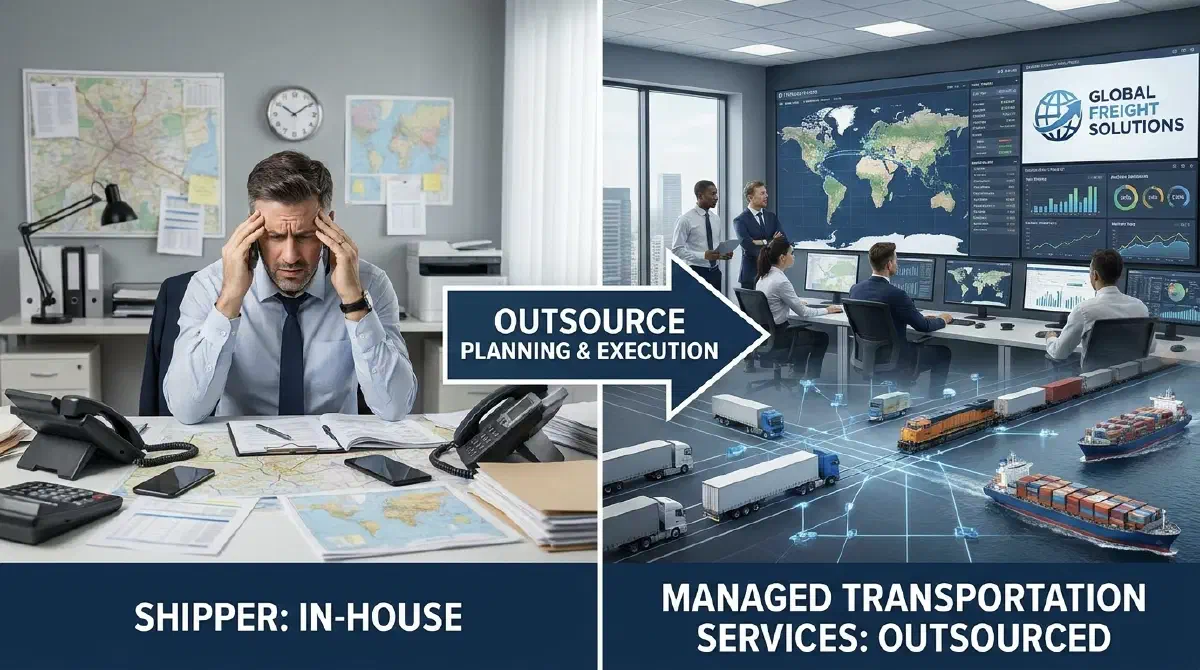
When your team spends more time chasing trucks, updates, and invoices than planning freight, managed transportation can provide a defined process for that daily work. Agree on who handles booking, carrier communication, exceptions, and reporting. Then use service and cost data to review whether the arrangement is solving the original problem.
Define the operating responsibilities
Managed transportation is an ongoing coordination arrangement whose scope should match the shipper’s needs. Establish which modes and lanes are included, what decisions the provider can make, and when an issue needs your team’s approval. Clear escalation rules matter as much as routine booking.
Start with transportation-management guidance
- What are managed transportation services? explains the scope and use cases.
- How to reduce freight costs without sacrificing service connects planning with cost control.
- HighQ managed transportation services outlines a service discussion for your operation.
What to define before the handoff
- Included lanes, shipment volumes, equipment, and service requirements.
- Booking authority, update frequency, escalation contacts, and exception ownership.
- Reporting definitions, invoice-review responsibilities, and the review schedule.
How does managed transportation differ from one-time freight booking?
One-time booking focuses on arranging a particular move. Managed transportation adds an ongoing process for agreed parts of freight execution and review. The exact scope varies, so document what the provider will own and how performance will be assessed.
Related topics: 3PL support · Freight strategy · Freight costs.
Articles in this collection
Read the related HighQ articles below. Publication dates provide context for market conditions discussed in each article.