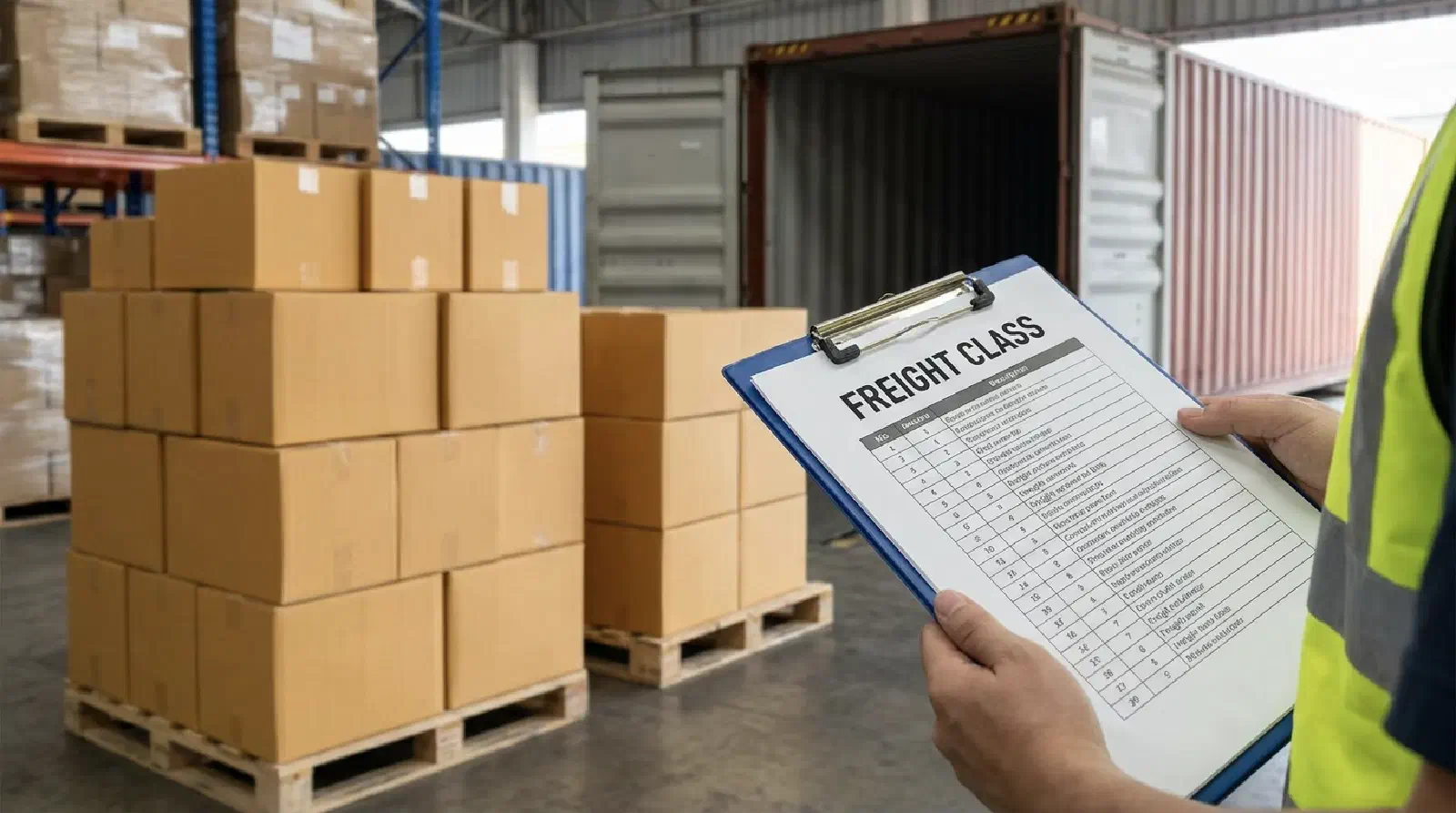
Freight class is one of the most misunderstood parts of LTL shipping, and in 2026 getting it wrong costs more than it ever has. If you have opened a freight invoice and found a charge higher than your quote, there is a good chance freight class was part of the problem.
What is freight class?
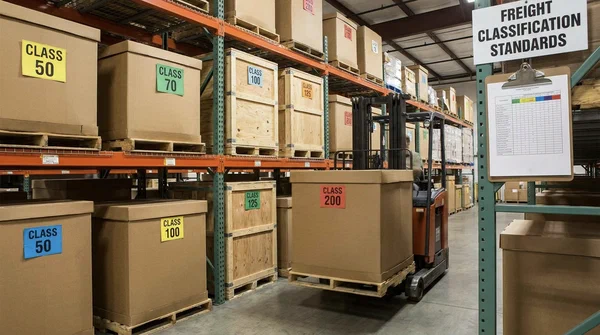
Freight class is a standardized system used to categorize LTL shipments for pricing purposes. It is the common language that carriers and shippers use to estimate the effort required to move a load. Every commodity is assigned a class number, and that number directly affects the rate.
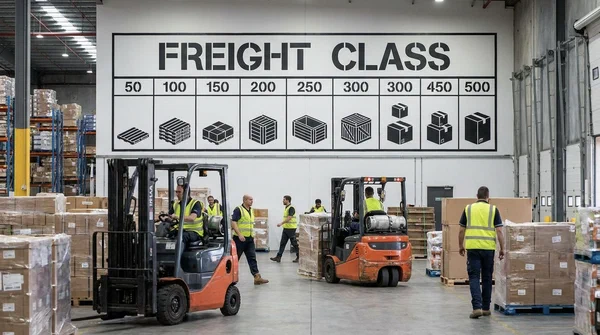
There are 18 freight classes in total, ranging from Class 50 to Class 500. The lower the class number, the denser and easier the freight is to move, and the lower your shipping cost tends to be. The higher the class, the more you usually pay per hundredweight.
Freight class applies to LTL shipping. If your shipment fills most of a trailer, full truckload shipping may be a better comparison point than class-based LTL pricing.
How freight class is calculated
Density
The NMFC evaluates freight class using four characteristics: density, stowability, handling, and liability. Density is determined by a shipment’s weight and dimensions, and for many standard commodities it is the most important factor.
To calculate density, measure your fully packaged shipment in inches, including the pallet and any wrapping. Multiply length by width by height to get total cubic inches. Divide by 1,728 to convert that number to cubic feet. Then divide the total weight in pounds by the cubic feet. That result is your density in pounds per cubic foot, and it maps to a freight class.
Even moving up one freight class can materially increase your freight cost, which is why packaging discipline and accurate measurements matter so much in LTL.
Stowability, handling, and liability
Special-handling freight such as fragile, hazmat, or non-stackable items may require additional flags in your bill of lading or transportation system. If those details are not captured correctly, a shipment can be misrated, delayed, or become harder to defend in a claim.
For most standard commodities, density does most of the work. These other factors become more important when the freight falls outside normal handling conditions.
The 18 freight classes at a glance
Class 50 usually applies to very dense items such as steel coils, machine castings, and concrete blocks. Class 55 covers products such as bricks, cement, and hardwood flooring. Class 60 includes many automotive parts and accessories. Class 65 often covers bottled beverages and boxed books. Class 70 captures items such as automobile engines and some food products.
From there, the classes continue upward as freight becomes lighter, bulkier, harder to stow, or riskier to handle. Freight in the Class 50 to 85 range is generally more manageable from an LTL cost perspective. Freight in Class 150 and above can become expensive enough that a truckload option may be worth comparing if the volume supports it.
What changed with NMFC in 2025 and 2026
The updated NMFC structure moved many commodities toward a more density-based model. That means thousands of commodity codes were changed, merged, or eliminated. Shippers still using codes from 2024 or earlier may be working from outdated classifications.
Many LTL carriers now use imaging and precision scales to verify declared dimensions and weight. If your numbers are off, the carrier may reclassify the shipment automatically, which can increase costs and create delivery issues.
The NMFTA also plans additional revisions throughout 2026. This is not a one-time adjustment. Classification now requires ongoing attention if you want to stay ahead of avoidable cost increases.
What happens if you use the wrong freight class
When a carrier inspects your shipment and finds a discrepancy, they can reclassify it and bill the difference. That usually means the higher linehaul rate, plus a reclassification fee, applied after the fact.
The costly part is that the mistake often happens at booking while the charge shows up later on the invoice. By then, the shipment has moved and your room to dispute the charge may be limited unless your documentation is strong.
How to make sure your class is right
- Measure accurately every time, including the pallet, wrapping, and dunnage.
- Use packaged dimensions, not product dimensions.
- Review your codes against the updated NMFC structure if they have not been checked since mid-2025.
- Audit your packaging, because oversized boxes and excess void fill can push freight into a higher class.
- Work with a logistics partner that verifies classification before the shipment moves and reviews questionable carrier reclassifications.
Final takeaway
Freight class is the number that tells a carrier how much space, handling, and risk your shipment represents, and it directly influences what you pay. With the 2025 NMFC overhaul fully being felt in 2026, accurate classification is no longer optional.
At HighQ Logistics, we help shippers verify freight class before a shipment moves and spot issues before they turn into invoice surprises. If you are seeing unexpected charges on your LTL invoices or want a second look before the next load goes out, start with a freight quote request or explore our LTL shipping services.